
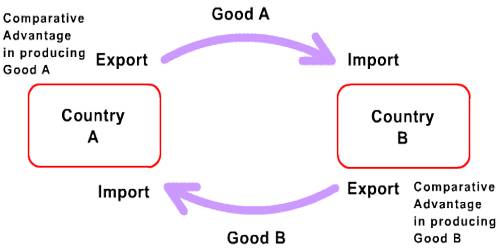
Comparative advantage B comparative advantage. It shows which country is better at producing a certain commodity.
Introduction To International Trade Boundless Economics

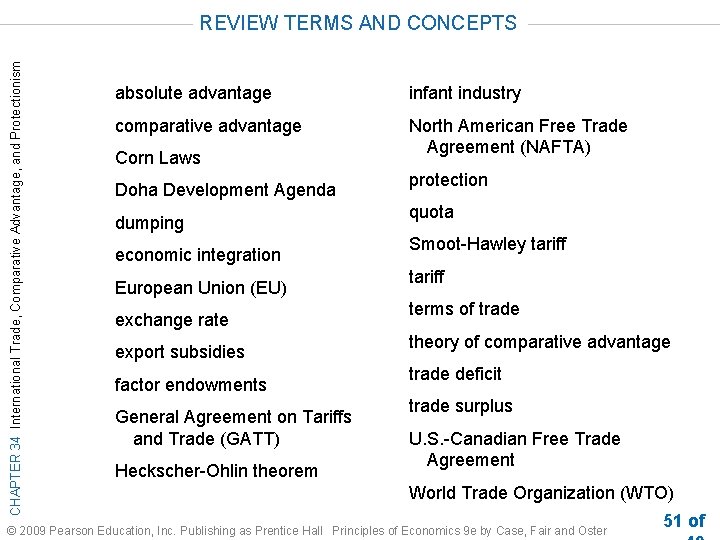
Chapter 34 International Trade Comparative Advantage And Protectionism
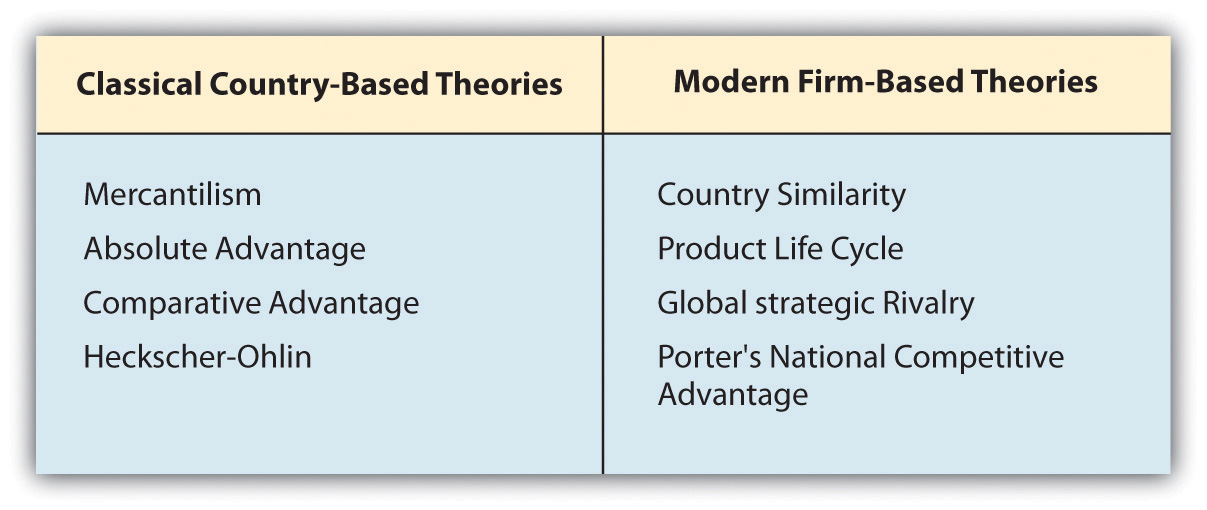
What Is International Trade Theory
These advantages could be absolute competitive or comparative in nature.
Concept absolute and comparative advantages of international trade. To answer this. Absolute advantage is when a country can make a product in greater quantity than the other country. Since the end of World War II ongoing trade liberalism under the banner World Peace through World Trade has led to the gradual removal of political regulatory and cultural obstacles to trade.
The continuous evolutionary behavior of international trade theories brings us back in the 1980s where Kalvin Lancaster and Paul Krugman introduced the concept of strategies based on global level rivalries targeting multinational corporations and the struggle needed in achieving higher advantages as compared to other international companies. If you are an economics student you would surely have heard about the absolute vs comparative advantage. Absolute advantage refers to the uncontested.
Let us discuss some of the major Difference Both Absolute advantages vs Comparative advantage are important concepts of international trade that help countries make decisions on domestic productions of goods resource allocation import export etc. Comparative advantage is a key insight that trade will still occur even if one country has an absolute advantage in all products. In a Nutshell the doctrine of comparative cost maintains that if trade if left free each country in the long run tends to specialize in the production and export of those commodities in whose production it enjoys a comparative advantage in terms of real cost and to obtain by import those commodities which could be produced at home at a comparative disadvantage in terms of real cost.
In this example we will explore the comparative advantage between two hypothetical countries namely Country X and Country Y. Comparative advantage increase D. International trade theories are simply different theories to explain international trade.
Both Absolute Advantages vs Comparative Advantage are popular choices in the market. To see the difference between comparative and absolute advantage consider a commercial aviation pilot and a baker. Absolute advantage and comparative advantage are two concepts in economics and international trade.
Nations mostly base their decisions on what to import or export on the concept of comparative advantage. Each country can produce and export goods and. To understand the benefits of trade or why we trade in the first place we need to understand the concepts of comparative and absolute advantage.
In an economic model agents have a comparative advantage over others in producing a particular good if they can produce that good at a lower relative opportunity cost or autarky price ie. It is precisely this that distinguishes absolute advantage from comparative advantage. Ricardo considered what goods and services countries should produce and.
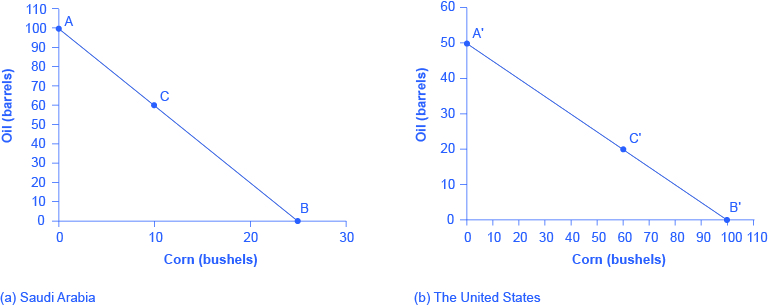
As per this theory the people in countries that are in the same level of development have similar preferences. Another important concept in international trade theory is the concept of terms of trade This refers to the amount of exports needed to obtain a given amount of imports with the fewer amount of exports needed the better for the country. The theory of comparative advantage A country has a comparative advantage when it can produce a good at a lower opportunity cost than another country.
The forgone opportunities of production are key to understand this concept. So lets use a comparative advantage example to help you understand it. To answer this challenge David Ricardo an English economist introduced the theory of comparative advantage in 1817.
Both Comparative and Absolute advantage theory doesnt tell which item a country should produce. Comparative advantage is a term associated with 19th Century English economist David Ricardo. In particular we will look at the trade of good A and good B between them.
Is perhaps the most important concept in international trade theory. The theory of comparative advantage shows that even if a country enjoys an absolute advantage in the production of goods Normal Goods Normal goods are a type of goods whose demand shows a direct relationship with a consumers income. He theorized that countries absolute advantages in different commodities would help them gain simultaneously through exports and imports making the unrestricted international trade even more important in the global economic framework.
In 1817 David Ricardo a businessman economist and member of the British Parliament wrote a treatise called On the Principles of. Absolute advantage increase B. A country may have an absolute or competitive advantage over another.
A international product life cycle. It can be argued that world output would increase when the principle of comparative advantage is applied by countries to determine what goods and services they should specialise in producing. Global trade involves the import of export of goods and services between international borders.
It is a concept relating to international trade amongst countries. It explains the concept of intra-industry trade. In contrast another country may not have any useful absolute advantages.
Alternatively when the relative productivities between goods compared with another country are the highest. Economist Adam Smith introduced the concept of absolute advantage in 1776 when he wrote An Inquiry into the Nature and Causes of the Wealth of Nations. Trade is the concept of exchanging goods and services.
Smith also used the concept of absolute advantage to explain gains from free trade in the international market. To see the difference consider an attorney and their secretary. The terms of trade can shift either benefiting a country or reducing its welfare.
Comparative advantage is a complicated macroeconomics concept. Comparative advantage is a key principle in international trade and forms the basis of why free trade is beneficial to countries. In the book he argued that the path to wealth is for nations to specialize in producing products for which they have an absolute advantage and to allow free international trade so it can export the goods it makes and import the things it needs.
In 1817 David Ricardo a businessman economist and member of the British Parliament wrote a treatise called On the Principles of. Both goods and therefore have an advantage in many areas. New trade theory is in line with the theory of _____ but at odds with _____ theory.
International product life cycle D factor proportions. The challenge to the absolute advantage theory was that some countries may be better at producing both goods and therefore have an advantage in many areas. Comparative advantage describes the economic reality of the work gains from trade for individuals firms or nations which arise from differences in their.
International Trade Theory. Factor proportions C national competitive advantage. If each country specializes in its it will benefit from trade and total global output will.
In contrast another country may not have any useful absolute advantages. Absolute advantage decrease C. Lower trade costs contribute to trade growth as it has been underlined that for developing economies a 10 reduction in transportation costs was associated with a 20 growth in international trade.
At a lower relative marginal cost prior to trade. To understand the benefits of trade or why we trade in the first place we need to understand the concepts of comparative and absolute advantage.
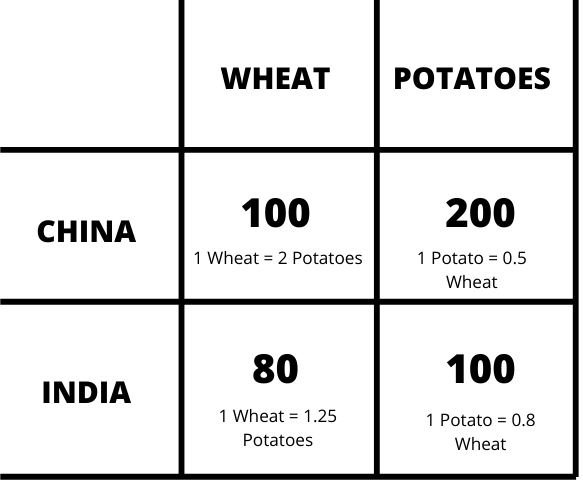
Comparative Advantage Definition And 3 Examples Boycewire

Comparative Advantage Econ 4 Ib
Absolute Advantage Theory Of International Trade Qs Study
Introduction To International Trade Boundless Economics


Comparative Advantage International Trade Theory Economics Online Economics Online
Absolute Advantage Vs Comparative Advantage Top 8 Differences
33 1 Absolute And Comparative Advantage Principles Of Economics

Comparative Advantage Econ 4 Ib


